Showing posts with label social media law. Show all posts

Monday, 11 November 2013

The Irish Times - The sky's the limit for Irish legal eagles on Twitter


The Irish Times ran an interesting article by Fiona Gartland in the Monday 11 November 2013 edition of the paper under the title The sky's the limit for legal eagles on Twitter here. Fiona featured the experiences of three legal tweeters. Here's what they said:

Fiona de Londras (@fdelond) is a professor of law at Durham University and is a founder member of group blog humanrights.ie. She said:
"And it’s a way I can still contribute to debates in Ireland as well as in the UK, even though I am now institutionally located in the UK. I can engage with a Minister, or a TD or a Senator so easily through twitter and connect them into my research in a way that was previously almost impossible for academics to do,” she says. But she adds “you have to be quite good in figuring out how to boil a message down”."
Limerick solicitor Rossa McMahon writes on clatterofthelaw.wordpress.com said:
"I used to work in Dublin in a big firm where I had a lot of colleagues and now I’m in a much smaller situation and I find it quite a good way of keeping in touch with other people. Sometimes you know someone through it and then privately bounce ideas off them or see what they think about particular things."
Rossa McMahon commented on the business development potential of social media, saying: "From a marketing point of view, I couldn’t necessarily say that I gain anything specific, although I have gotten bits and pieces of work out of it."

Law professor at Trinity College Dublin Eoin O’Dell (@cearta) has written about law, education and policy on cearta.ie since 2006. He said:

"I consider that it is a very important part of my academic work to make my research and arguments available and to engage in discussion and debate online is just another means of disseminating research and engaging in discussion."
Eoin O'Dell explained that his blog posts tend to be “considered discussions” of 500 or 600 words in length. He also explained that his Twitter account is used to share interesting items with his 2,200 plus followers and to  respond to comments. He also said: "I think it’s a good thing and I think it is increasing the direction in which we are going."

Read the article from the Irish Times in full here. Read my blog post on Defero Law on the article here.

Thursday, 20 June 2013

DPP publishes full and final social media prosecution guidelines

CPS press release with full list of links to relevant documents and guidelines here.

http://www.cps.gov.uk/news/latest_news/dpp_publishes_final_guidelines_for_prosecutions_involving_social_media_communications/

Telegraph write up here.

http://www.telegraph.co.uk/technology/social-media/10132657/Offensive-online-posts-to-escape-prosecution-if-writers-apologise-say-new-guidelines.html

Wednesday, 12 June 2013

Charles Christian on social media and the law


In one of his latest podcast in his Law Tour Report, Charon QC interviewed Charles Christian of Legal Technology. From 34 minutes of the podcast Charles Christian talks social media and the law surrounding contempt of court:
"[Social media has] put a broadcasting tool in the hands of many. Whereas before their only outlet would have been to write a "yours disgustedly" letters to the Daily Mail and the Telegraph - which an editor would have spotted, intercepted and binned - now they can get through all of that.

Monday, 10 June 2013

Christopher Hitchens left England in part, because of the Libel Laws


We have a great tradition in this country. It goes back a long way; the classic statements of which are in John  Milton's Areopagitica, and in John Stuart Mill's essay On Liberty where it is said (Christopher Hitchens paraphrases):
"However discredited an opinion may be, to ban it would still be a huge mistake; because otherwise there would be no way of finding out if you yourself had made a correct point. If you had no opponent; if you silenced them there would be no opponent. There would be no measure of your own articulacy or your own willingness to argue."                                             (At 56 minutes 40 seconds of video above)
Hitchens adds his take:
"Thus, it must always be the case that any opinion, no matter how unpopular must be at the front and centre of the argument."
Christopher Hitchens then said that Rosa Luxemburg put it even better:
"Freedom of speech is meaningless unless it's for the person who thinks differently."
Member of the audience then asked: "do you believe in the laws of libel and slander?"

Christopher Hitchens replied:
"No. I left England partly because of the laws of libel. It makes journalism almost impossible. Because again, it's a matter of her feelings (lady beside him). The person bringing a law suit in Britain (many of them tried it on me when I was here) has only to prove that their reputation has been damaged or that their feelings have been hurt. They don't have to prove what I say is not true."
He then added a real shock and awe statement which if you think about it, does kind of ring true. Hitch said:
"There you have it again: it's a secular form of a blasphemy law."                                                 (At 57 minutes 25 seconds of the video above)
Powerful stuff. YouTube video in full here.

Friday, 7 June 2013

Student Sentenced for Lee Rigby Tweet


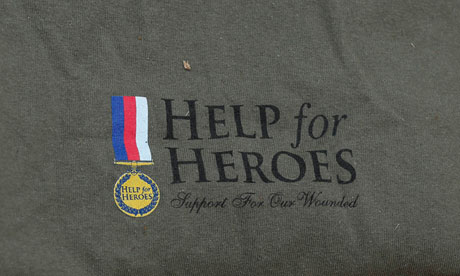
Student Deyka Ayan Hassan sentenced to community service for sending 'joke' tweet after Woolwich killing
that said that people wearing Help for Heroes T-shirts "deserve to be beheaded".

Read more about the case here and here.


A man was also arrested for making malicious communications over Facebook which you can read about here and here.

Tuesday, 4 June 2013

Social Media Law in Australia and America

The internet is a boundless, borderless phenomenon that is both a force for good and bad.  A reality that law enforcement agencies around the world have had to confront. We've looked at the situation as it is in the UK and Ireland before; but what about the other countries.

Well in Australia, they're coming alive to the difficulties. In an article here, Adelaide Now discusses the challenge that social media posses to the trial by jury model and the criminal justice system as a whole. Here's what the paper said:
"The right to a fair trial is considered one of the fundamental rights of a defendant in a criminal case. 
However, traditional measures such as suppression orders, designed to protect that right, are proving ineffective in the face of prejudicial material uploaded in real time on social media. 
The culprit is not the traditional media, but jurors, witnesses and members of the public who become instant mass-media publishers with every post and tweet. 
In addition, well-meaning jurors using the internet to conduct their own research about issues in trials threaten the court's ability to ensure that cases are decided only on the admissible evidence presented to the court."

High Court Judge makes new Social Media Law (re: Breach of CourtInjunctions)


Less than two weeks after the Hon. Mr Justice Tugendhat delivered judgment on the McAlpine v Bercow Twitter libel affair (see here and here), the UK's top media and libel judge has made new law and sent out another clear message to social media users.

Namely: the internet may have made everyone a  publisher, however the internet did not made publishing responsibility free. Therefore, don't say anything on social media you wouldn't say on a print newspaper.

This time round the message from the legal mill is a little more social media-user friendly. OK, to understand things we need to go back to here on Defero Law. In that post entitled, "Is Social Media Uncontrollable?" I talked about two men who posted images of the two men who killed Jamie Bulger. This was in breach of a court order; therefore there was a legal effect to their actions (see Social Media and the Law: Know Where You Stand, my blog on the Huffington Post).


The two men were originally convicted and handed down prison terms. Now this has changed. See tweets bellow from Adam Wagner.

Full judgement available below in tweet from the Judicial Office:

This is another important step on the road to hammering out the law that governs activity on the social web. Just this time the judge has made new law that makes it clear what will happen if you publish comments online that breach a court order. And as Adam Wagner rightly said: "TAKE NOTE!"

Thursday, 30 May 2013

How Free is Our Speech? - Radio 4 Discussion

Clive Anderson recently chaired a discussion on Radio 4 that asked a simple question: how free is our speech in Britain today? The discussion also took the time to considered specifically how speech on social media should be controlled or otherwise.

Billed as 'the programme that gets behind the legal issues of the day,' it certainly did that. You can listen to the episode in full here.

Clive Anderson kicked things off with a nice overview of the legal history as it exists in law in Britain to date and how this contrasts with our love of freedom:

Friday, 24 May 2013

Twitter is "inherently dangerous" says David Aaronivitch

The broadcaster and journalist David Aaronivitch (@DAaronovitch) has waded into the McAlpine/Bercow affair and has added his two cents to the debate. He's thrown up some interesting points and insights. Writing in the Times (full article here) the title and header where hard hitting, going like this:


Lessons from McAlpine v Bercow

Presiding over the High Court Mr Justice Tugendhat found that Sally Bercow had libelled Lord McAlpine by publishing on Twitter defamatory, albeit "nuanced", communications. Full judgement can be read here. Bad for law firm Carter-Ruck who had been instructed by Bercow. In his summation, the UK's senior libel judge Judge Tugendhat said:
“I find that the Tweet meant, in its natural and ordinary defamatory meaning, that the Claimant was a paedophile who was guilty of sexually abusing boys living in care. 
If I were wrong about that, I would find that the Tweet bore an innuendo meaning to the same effect.”

The McAlpine v Bercow High Court Hearing as it Unfolded on Twitter

Full stream of live tweets from (@JackofKent) who attended the preliminary hearing at the High Court in the case of Bercow v McAlpine. Full ruling by Lord Tugendhat here.

Judge Tugendhat Sends Out Social Media Warning and Advice

From the Spectator quoting Lord McAlpine's solicitor here:
"In the meantime, vindicated Lord McAlpine’s solicitor sounds a clear and concise note: ‘Mr Tugendhat’s judgment is one of great public interest and provides a warning to, and guidance for, people who use social media."

Tuesday, 21 May 2013

Charon QC Law Tour Podcast: John Cooper QC on Social Media and the Law

John Cooper QC and Paul Chambers of #TwitterJokeTrial


Below are the blunt words of Keir Starmer QC, the former Director of Public Prosecutions (DPP). Why the bluntness? The former head of public prosecutions in England and Wales was obviously angered by the criticism delivered by experienced criminal silk, John Cooper QC (@John_Cooper_QC) who cast doubt on the newly published (December 19 2012) interim social media prosecution guidelines. Here's what he said:
“Well I don’t think John Cooper with all respect has seen anything like the number of cases I have. I don’t think he has thought about the sophistication of the issues. There are many cases…I mean he can point to one case [the Twitter Joke Trial]…yeah he makes a cheap point about one case. I've got to deal with the many thousands of cases that come in; I've got to deal with all the chief constables. So, yes, nice cheap point, but actually let’s get back to reality.”

Sunday, 19 May 2013

What Are Positive Effects of Social Media in the First Hours of A Crisis Like the Boston Bombing?


This was the question put to a panel of speakers on the April 19 2013 episode of Radio 4's 'Any Questions?' The special edition was hosted by Columbia University in New York, a most fitting location for such as discussion. You can hear the discussion in full here.
Related Posts Plugin for WordPress, Blogger...

Quote

Why Choose Us?

Incredible Support